
How to Detangle Wet Hair Before Styling Without the Tugging and Breakage
You have washed your hair, reached for your brush and immediately encountered a knot that seems determined to stay exactly where it is.
A few impatient strokes later, your scalp hurts, the brush is full of hair and getting ready has become considerably less relaxing.
Detangling can feel like an inconvenient step between washing and styling. However, giving it a little attention makes the rest of your routine easier to manage. Your styling brush can concentrate on shaping your hair, rather than wrestling through knots.
The approach depends partly on your hair texture. Advice that suits straight hair may be unhelpful for tightly curled hair, particularly when deciding whether to detangle wet, damp or partially dried strands.
Here is how to build a gentle detangling routine, choose suitable tools and prepare your hair for the style you want.
Should you detangle hair while it is wet?
There is no single answer for every hair type.
The American Academy of Dermatology advises allowing straight hair to dry a little before gently combing it. For thick, curly hair, it recommends detangling in the shower while conditioner is still in the hair. Wet hair requires gentle handling, so the timing and technique both matter.
That distinction helps explain why seemingly contradictory advice circulates online.
Someone with straight hair may find partial drying useful. Someone with tightly curled hair may need water and conditioning products to make detangling manageable.
Start with guidance suited to your texture, then assess how comfortably your routine works. Pain, repeated snagging and forceful pulling are reasons to pause and adjust.
Make detangling a separate step
It is tempting to grab whichever brush is nearest and begin blow-drying immediately.
Instead, give detangling its own place in your routine. Decide when you will do it, which tool you will use and where you will work.
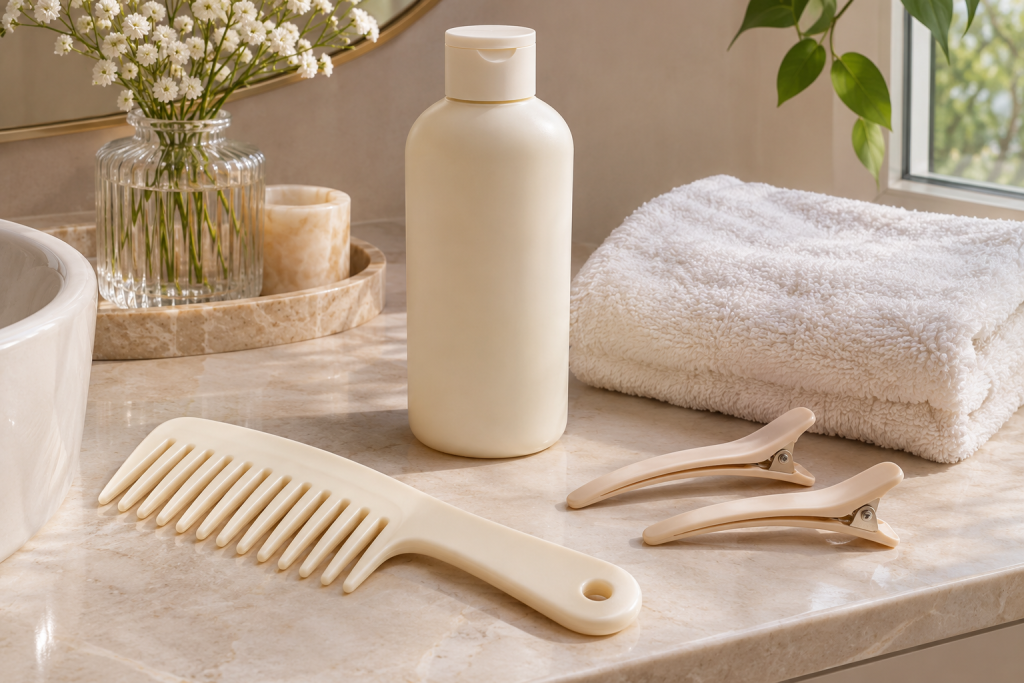
Keep your comb, conditioner and sectioning clips within reach. If you detangle in the shower, arrange them where you can access them comfortably.
Allow enough time for your hair’s length and density. A hurried five-minute routine may be unrealistic for someone with long, thick hair.
You do not need an elaborate setup. You need a sequence you can follow without searching a drawer with dripping hair or trying to manage a knot while your hairdryer is already running.
Choose a tool you can control
A wide-tooth comb is a useful starting point. Inspect it for rough edges, damaged teeth or joins that might catch.
For curly and coily hair, the American Academy of Dermatology also includes fingers and brushes designed for those textures among its detangling options.
If you prefer a brush, read its intended use. A brush designed for smoothing during blow-drying performs a different job from one intended for wet detangling.
Consider the handle, too. Can you hold it securely with damp hands? Does its size let you work comfortably around your head?
You should be able to control each movement. A tool that repeatedly slips, scratches or catches deserves reassessment, however impressive its packaging looks.
Let conditioner do its job
Conditioner belongs in the preparation stage. The American Academy of Dermatology recommends using it after shampooing because it helps moisturise, detangle and improve manageability. It suggests concentrating on the ends for fine or straight hair, while dry or curly hair may benefit from application throughout the lengths.
Follow the product’s instructions for application and rinsing.
Check whether you are distributing it through the areas that actually tangle. A quick application to an easy-to-reach patch may leave other sections overlooked.
For your next wash, pay attention to coverage before deciding the product is ineffective.
Keep the routine consistent for a few washes so you can judge it fairly. Changing several products and techniques together makes the result harder to interpret.
Work in manageable sections
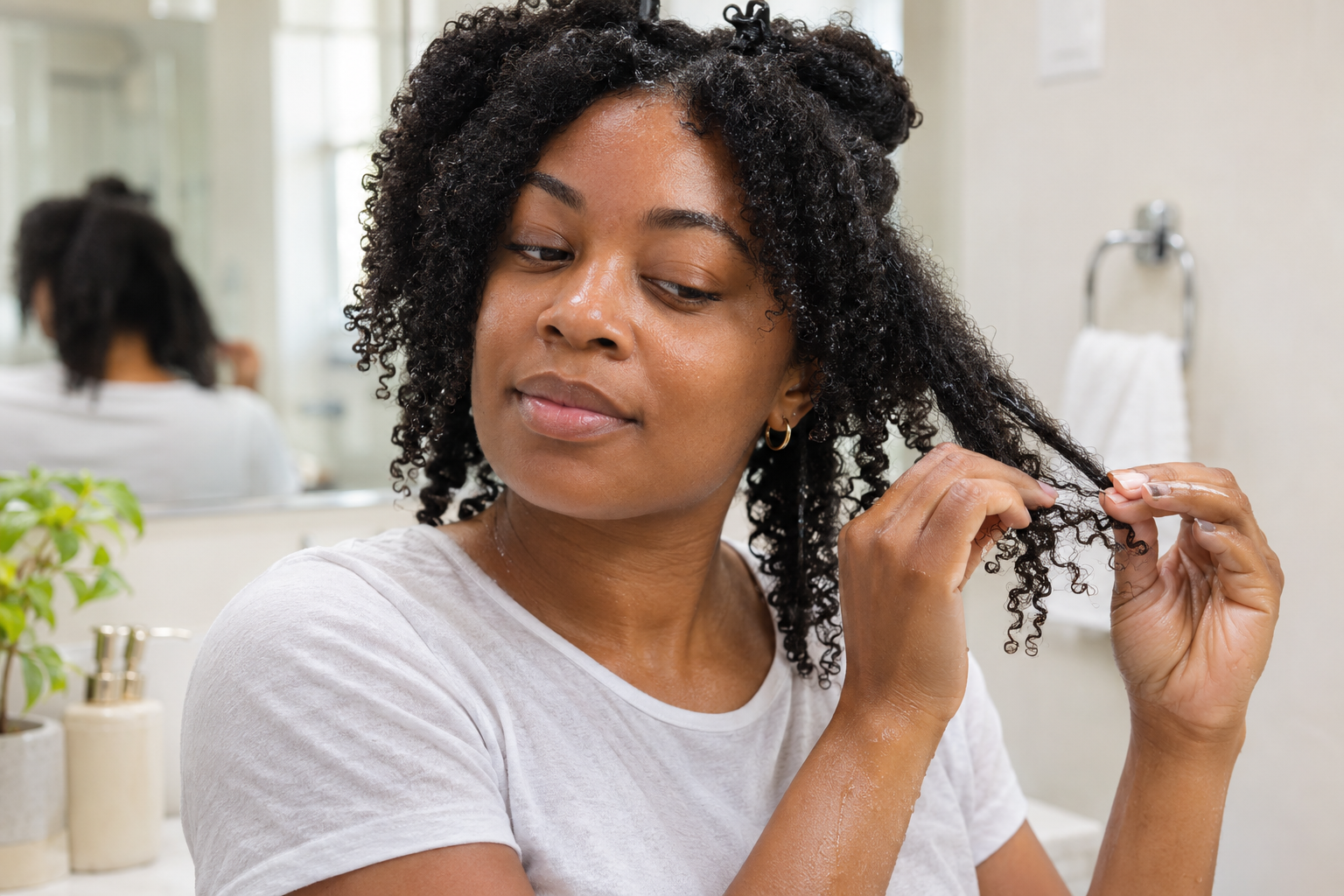
Trying to detangle your entire head at once makes it difficult to see where resistance is coming from.
Divide your hair into sections you can comfortably reach and manage. The American Academy of Dermatology specifically recommends sectioning for curly hair to make detangling easier.
There is no required number of sections. Choose according to your hair and your patience.
Keep the area you are working on separate from surrounding strands. Once finished, place it aside gently so you can track your progress.
If a section feels overwhelming, divide it again.
This also creates useful stopping points. You can pause, change your position or rest your arm without losing track of which areas still need attention.
Begin at the ends and work upwards
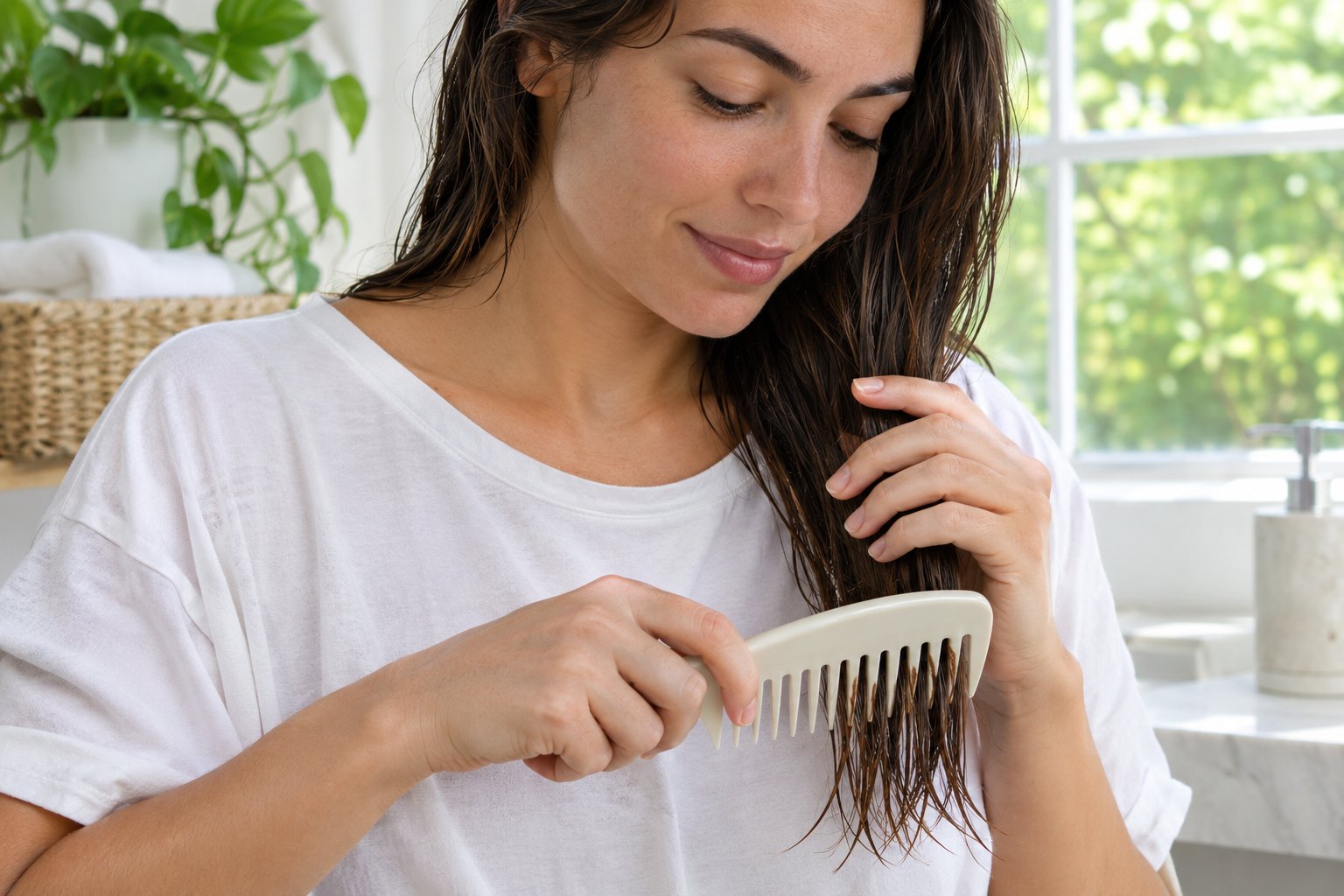
Starting at the scalp and dragging a comb down the full length is an easy habit to fall into.
Dermatologists recommend beginning at the ends, then gradually working higher as tangles are released.
Keep the movements small and controlled.
For a practical way to remember the sequence, think about clearing a short stretch first. Once that area is manageable, include a little more hair above it.
You are looking for comfortable progress. There is no prize for reaching the roots in one stroke.
If your comb stops, stop your hand as well. Revisit the resistant area instead of adding force.
Once a section is detangled, move on rather than repeatedly combing it to check.
What to do when you find a stubborn knot
Put the comb down for a moment and identify the knot with your fingers.
Separate the surrounding hair so you can see or feel what you are working on. Try gently loosening accessible strands around the knot’s edges.
The American Academy of Dermatology advises removing tangles gently and using moisturising conditioner when needed. It also recommends avoiding pulling and tugging during combing and styling.
If you are becoming frustrated, take a break. Repeatedly attempting the same forceful movement is unlikely to improve the experience.
For a large, tight or matted area, contact a hairdresser experienced in detangling. Explain the situation before booking so they can allow appropriate time.
Avoid reaching for scissors simply because you are running late. Give yourself the opportunity to get help first.
Would a leave-in conditioner help?
A leave-in conditioner may be useful if your hair remains difficult to manage after washing and conditioning.
The American Academy of Dermatology recommends choosing one formulated for your hair type. Fine, straight hair generally needs a lighter option, while curly hair may need more conditioning. Begin with the smallest amount that does the job and apply according to the label.
Treat this as a targeted adjustment.
Make a note of where you apply it and whether those sections become easier to handle. You can then decide whether it earns a place in your routine.
You do not need to buy several detanglers at once. One suitable product, used consistently, gives you a clearer basis for comparison.
Rinse-out conditioner and leave-in conditioner are different
It might seem economical to dilute your usual shower conditioner in a spray bottle, but these products are formulated for different uses.
The American Academy of Dermatology advises against using rinse-out conditioner as a homemade leave-in. Follow the product’s intended use instead.
Read the label before adding anything to your routine. Check whether the product should be rinsed away, applied to damp hair or used only in particular areas.
Keep the original packaging until the product is finished so you retain the directions.
If a routine requires you to remember several incompatible instructions, simplify it. A clear wash, condition, detangle and style sequence is easier to repeat than a collection of improvised mixtures.
Dry gently after washing
Once you leave the shower, avoid vigorous towel rubbing. Dermatologists recommend absorbing moisture with a towel or T-shirt instead.
Keep your drying method compatible with the texture-specific detangling sequence you have chosen.
For example, someone detangling conditioned curls in the shower will have completed that step before towel drying. Someone with straight hair may be allowing it to dry a little before combing.
Arrange your routine accordingly rather than trying to follow both methods at once.
Choose a towel you find comfortable and easy to handle. An expensive accessory is optional; gentle handling is the useful habit.
Before continuing, check that you have everything needed for the next stage within reach.
Moving from detangling to styling
Once your hair is manageable, decide how you intend to style it.
For a blow-dry, organise your brush, clips and dryer before beginning. For a natural finish, follow your usual texture-specific styling routine.
Check each appliance’s requirements for starting dampness. A conventional straightener, an air styler and a hot brush may have different instructions.
If you use a leave-in conditioner, do not assume it provides heat protection. The American Academy of Dermatology notes that some leave-ins offer this benefit, which should be stated on the packaging.
Detangling is complete when you can comfortably proceed. You do not need to keep passing a brush through your hair while deciding what to do next.
Adjust the routine to your hair
Use these questions to refine your approach:
| What you notice | What to review |
|---|---|
| Straight hair catches when soaking wet | Whether allowing some drying time improves handling |
| Curls are difficult to separate | Water, conditioning and sectioning |
| One area always tangles | Product coverage and access to that section |
| The tool scratches or catches | Its condition and suitability |
| Detangling takes longer than expected | Section size and the time allowed |
| Styling begins before knots are cleared | Where detangling sits in your routine |
Make one adjustment at a time.
For example, spend a week using smaller sections before replacing your comb and conditioner. You will have a better idea of which change helped.
Ask your stylist to demonstrate on the sections you find difficult.
What if your hair still tangles badly?
Keep a brief record of what happens.
Does the problem begin during washing, after drying or when you start styling? Is it concentrated at the ends or across the whole head? Has your routine recently changed?
These observations can make a conversation with your hairdresser more useful.
If you also notice thinning, persistent scalp discomfort or a concerning change in hair loss, seek medical advice. The American Academy of Dermatology recommends consulting a dermatologist when care changes do not resolve problems, especially where thinning or hair loss is involved.
Bring your product list and describe the technique you use. Specific information is more helpful than simply saying your hair is impossible.
A manageable routine for your next wash
Before washing, set out your conditioner, suitable detangling tool, towel and clips.
Choose the timing that suits your texture. Work through manageable sections, beginning at the ends and progressing upwards. Pause at resistance, address individual knots gently and stop once each section is ready.
Then move into your chosen styling routine, following product and appliance instructions.
For the first few attempts, leave yourself extra time. Notice which areas need more attention and which parts of the process already work well.
You may find that the most useful improvement is a small one: a better-positioned mirror, more careful product coverage or smaller sections.
The aim is a routine you can carry out comfortably, leaving your hair ready for styling without turning every wash into a wrestling match.